On Tour with Prism Book Tours
There's nothing like curling up with a great epic fantasy! And today I am bringing you an exclusive excerpt from Blade of Ash by C.F.E. Black to whet your appetite. Be sure to also check out the rest of the tour and the great giveaway!

Blade of Ash
(Scepter and Crown #1)
By C.F.E. Black
Young Adult, Fantasy, Romance
Hardcover & ebook, 363 Pages
January 25, 2022 by Hillcity Press
The only way to beat death is to chase it.
Newly crowned, Red blames one person for his father’s murder: the secret sorceress sworn to protect the king. Alyana Barron, Royal Sorcerer to the throne of Tandera, fears her magic is weakening. For reasons they don't fully understand, a powerful enemy twisted by dark magic wants them both dead.
When Red is cursed, his life entwines with Aly’s in ways neither of them expected. Together, they chase after a cure that will heal the king and restore her magic, but the closer they get to a cure, the nearer they step toward death, for the path to the cure is as dangerous as the curse itself.
Blade of Ash is the first in a new, epic YA fantasy series perfect for fans of clean enemies-to-lovers romance packed full of royal intrigue, legends, and plenty of ballgowns. If you like female bodyguards and forced proximity with life-and-death stakes, check out Blade of Ash.
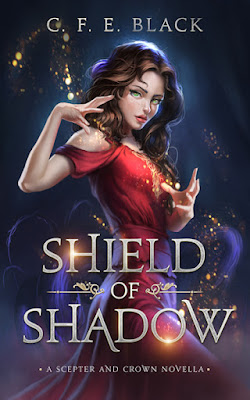
Alyana Barron is tired of living a secluded life apart from society, hiding her magic from watching eyes. When a nobleman offers Aly the chance to train as a Master Sorcerer, secrets hidden in her past will come to light and she'll have to fight to keep her safety and guard her heart.
About the Author

C. F. E. Black loves to get swept away in books, both reading and writing them. When she’s not writing or chasing her son, she’s teaching high schoolers and trying her best to be a light in their lives. She lives in beautiful north Alabama with her superhero husband, sons, and fur-family. Connect with her and find free stories at www.cfeblack.com.

Tour Giveaway

A signed hardcover of Blade of Ash by C.F.E. Black, a character art print of Red and Aly, and a map print (US only; $20 Amazon e-gift card will be substituted for INT)
Ends March 30, 2022
ENTER HERE
(Affiliate links included.)
Read an exclusive excerpt:
Standing before him, she lifted both hands toward him.
He realized what she was doing and stiffened as her hands met his head. The way her fingers felt as they slipped into and under his hair, the cool lines traced by her fingertips on his hot skin, made his entire body shudder. She felt his tremor and clamped her hands around his skull, her magic already beginning to seep in.
The knots in his shoulders, neck, back, chest, began to loosen almost immediately. He couldn’t even tell she was doing magic, but he felt the pain ebb. His head tipped forward even more, her strong hands holding him steady. The crown of his head hovered merely inches from her stomach, and every part of Red could feel those inches like they were the last few steps between a thirsty man in the desert and a pool of clear water.
The blood flushed to the knotted areas in his body, melting the tension and seeking the places that had been closed off for too long. He heard himself whimper. As his muscles gave way to her magic, he felt sleep beginning to creep up from his toes to his torso. He was going to fall over and sleep right there on the floor.
But for a moment, he fought the tiredness, not wanting to cut this moment short. Her fingers twitched slightly against his skull, the sensation electrifying on top of her closeness and the magic surging through his body. He did not want it to end.
Unexpectedly he wanted only one thing: to cross the distance between them.
Excerpted from Blade of Ash by C.F.E. Black, Copyright © 2022 by C.F.E. Black. Published by Hillcity Press.
Other Books in the Series
Shield of Shadow
(Scepter and Crown #0.5)
By C.F.E. Black
Young Adult, Fantasy, Romance
E-book, 141 Pages
November 2021 by Hillcity Press
Alyana Barron is tired of living a secluded life apart from society, hiding her magic from watching eyes. When a nobleman offers Aly the chance to train as a Master Sorcerer, secrets hidden in her past will come to light and she'll have to fight to keep her safety and guard her heart.
(Affiliate links included.)
About the Author
C. F. E. Black loves to get swept away in books, both reading and writing them. When she’s not writing or chasing her son, she’s teaching high schoolers and trying her best to be a light in their lives. She lives in beautiful north Alabama with her superhero husband, sons, and fur-family. Connect with her and find free stories at www.cfeblack.com.
Tour Schedule
Tour Giveaway
Ends March 30, 2022
ENTER HERE